Miconceptions in Science

One of the main reasons I started this blog was to bridge the gap between  the science community and the general public; due to many misconceptions that people hold about who scientists are. Just recently, two prime examples of science misconceptions have surfaced in mainstream and social media : women in science, and religion in science.

Women and Science

British winners of the 2001 Nobel Prize for Physiology and Medicine Dr Tim Hunt (R) and Sir Paul Nur..Sir Tim Hunt a British Scientist, made disparaging comments about women working alongside men in the lab. At the World Conference of Science Journalists, on June 9, 2015, this Nobel Prize winning biochemist said “three things happen when they are in the lab; you fall in love with them, they fall in love with you, and you criticize them, they cry”. He later apologized for his statement, essentially by stating that he was speaking from his personal experiences with women in his labs. He still however maintained that genders should be separated in order to not undermine the science; in effort to minimize distractions.

womeninscienceSocial media lit up, with women scientist on twitter using the hash-tag  “distractinglysexy” to convey their disdain for the remarks made, by Sir Tim Hunt. You can read more about it here. This goes to show that women still experience much gender bias in science. Even when the playing field is supposed to be leveled, they are often still viewed as objects of love or as being too emotional to be practical enough to conduct  good science.

Religion and Science

Another fallacy of science is that a person cannot be both a scientist and believe in God. That science and religion are mutually exclusive. However it would surprise many to know that Pope Francis is indeed a Chemist. Before the papacy he earned his Masters degree in Chemistry from the University of Buenos Aires.

popememe

In school, we are taught that many early scientist were shunned and persecuted by the Catholic church for their findings. This is a partial truth, in actuality the Church as supported educational institutions including the study of science. In addition, many scientist also are devout Christians or followers of other God centered faiths. Most famously we have Gregor Mendel, Johannes Kepler – mathematician and astronomer, Nicholas Copernicus – astronomer, and Isaac Newton.

For example, Gregor Mendel was an Augustinian priest and botanist. He lived in the 19th century, from 1822 to 1884, and  is credited with being the founder of genetics. He discovered the principles of genetics with his hybridization studies on the garden pea (Pisum Sativum). From him we got Mendel’s Laws of Inheritance and Mendelian Genetics. His conducted his work in the garden (glasshouse) of his monastery.

Summary

One thing science teaches us is to not be biased. Bias is the number one foe of good science, because it takes away from its credibility and allows for the overlooking of error. Various types of people become scientists, and the stereotypical male nerd type is not necessarily the standard, at least not anymore.

From Disease to Weapon: The story of Anthrax

I initially meant to write an article on anthrax over a week ago; good thing I waited. Anthrax has recently been in the news again; not once but twice. The first situation was when a Maryland lab discovered that it had been mistakenly sent live anthrax samples through commercial mail from an Army biodefense facility in Utah. The samples were sent to several labs across the United States  working to develop a new diagnostic test for anthrax (normally only inactivated anthrax is used for research). Samples were also sent to South Korea, and now since further investigation it has been revealed that  live samples of anthrax may have also been sent to the United Kingdom and Australia several years ago. The second and most recent incident comes just this week (June 9th) when a 50-year-old man robbed a Chase bank while claiming to have anthrax. He detained by police who recovered a jar in his truck containing a substance that he says is a protein powder and not anthrax. Samples from the jar have been sent for testing.

What is Anthrax

Bacillus Anthracis is a gram-positive (thick peptidoglycan layer), bacilli (rod-shaped), spore-forming bacterium. It is virulent and causes a highly contagious disease. All warm-blooded animals are capable of contracting anthrax, but it is not known to be transmitted person-to-person. B. Anthracis is also a facultative anaerobic bacteria, meaning that it normally uses oxygen for respiration, but can survive in environments where there is no oxygen. Continue reading

…and Wolves Oh My!

I saw this video posted to a friends Facebook the other day. It’s a lovely short story about the reintroduction of wolves to Yellowstone National Park. Wolves are considered an endangered species in the United States mainland, except for the state of Minnesota where they are listed as “threatened”.

What happened to the Wolves in the first place?

As America expanded westward and established farms and towns a need and desire to eliminate wolves began. Wolves were not only a threat to humans but to their livestock and goods. Programs toward predator eradication which involved bounty programs and widespread poisoning lead to the decimation of nearly all gray wolves in the United States and southern Canada.  One method of extermination involved shooting bison and poisoning the carcasses; which were then eaten by the wolves. By the end of the 19th century the wolf had become all but lost.

Return of the Wolf

In 1995 gray wolves were transplanted to the Yellowstone National Park as part of an experimental program to bolster the wolf population in hopes of getting the animal off of the endangered list. In 1997 District Judge Bill Downes ruled that 66 transplanted wolves must be expelled from the park, citing violation of the Endangered Species Act of 1973. He stated that the act did not cover experimental animals. However, the decision was overruled by the 9th circuit court and the wolves were allowed to stay.

Discussion

While wolves can be problematic to those people who live around them, they are vital predators in the hierarchy of the ecosystem they inhabit. Normally Wolves out-compete and kill coyote, yet because their numbers have been so decimated coyote have now become very populous and as a result are permitted to be hunted year round. Interestingly enough, some coyote have a very small (about 5%) of wolf DNA. This is a result of interspecies mating between wolves and coyotes at what is postulated to be the early 1900’s (around the same time that wolves began to go extinct). These relatively unknown and mysterious hybrids are known as Coywolves. They are bigger than coyote but smaller than wolves with wolf-like characteristics in the face, fur, and size of the feet. They are not a 50:50 mix as you might think (unlike mules); the offspring of wolves and coyotes are viable and can themselves reproduce.  The reason why wolves have mated with coyotes  and might still do so is  due to the lack of other wolves during recolonization(introduction back into a region) or during migration. The problem with this may be the loss of distinct species of coyote and wolves. It is also indicative of a loss of genetic variation within the wolf population itself, as smaller and smaller pools are available for mating. The reintroduction of wolves can help solve this issue.

The wolf had been eradicated  in Great Britain, Central Europe, and Japan, even before its erasure from the American landscape. The United States has seen the loss of the Gray wolf, the Red wolf, and the Mexican wolf. Currently the wolf flourishes naturally in Canada and Alaska.

Dose Makes the Poison: WATER INTOXICATION

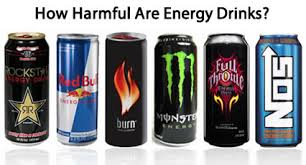
Last week we discussed the controversy and fear surrounding the safety of energy drinks like Red Bull. It’s interesting to see how people will rush to believe that certain things are inherently dangerous while believing that other things simply could not be. People are often shocked to learn that WATER can be toxic to your health.

Yes! Simple H2O can kill you. You might be saying to yourself…”well yes, if you get it into your lungs…”, but ingesting water can be toxic to your health also. If you drink too much water in a given period of time you can become very ill and even die from water intoxication. Continue reading

For the NERD….I mean SCIENTIST in your life

When you specialize in any of the STEM (science, technology, engineering, and mathematics) people often assume you’re a nerd. A friend once said to me “so how nerdy are you?” I didn’t even know how to respond because I don’t consider myself a nerd, I mean not really – not in the stereotypical sense at least. I never really thought much about it I guess, because when people see me they usually assume I’m in the fashion industry or something (my little sister is actually). So, I started wondering, then I realized I kind of am a bit geeky.

For instance, I was doing a little online window shopping on ModCloth – looking for some summertime lab-friendly attire (who else does that?) and stumbled upon some cool science themed items.  Of course I must be a nerd because I was extremely excited about this. There is a neurotransmitter bracelet, beaker shaped shot glasses, test tube desk organizer, and even a female chromosome t-shirt. If you’re ever at a loss for a gift for the nerd…*cough* I mean the scientist in your life, check out these great ideas:

neurotransbraceletmodclotherackspicechemshotglass modclothteainfusermodclothvitapensmodclothauringmodclothauearmodclothdeskorgmodclothteexx

Toxicity Profile: REDBULL

redbullcanAnyone who knows me knows that I LOVE drinking RED BULL energy drinks. I drink them all the time, mostly because I love the flavor, but really they also give me wings! Seriously, they keep me alert and help me stay focused and energized. The only thing I hate about it, is when someone sees me drinking one and says something about how bad they are for me. When this happens, I generally tend to ask why they think that, and the answers I usually get are because they are “basically liquid pixie sticks” or that they are “just not safe”. Continue reading

Naturally Obssessed: The making of a scientist – My review (sort of).

Back in 2009, the pharmaceutical company I was working for held a screening of Naturally Obsessed: The Making of a Scientist; in the library. I believe the makers of the movie – Richard Rifkind and Carole Rifkind were there – to speak to us about their documentary which followed 3 doctoral students (Rob, Kikpatrick, and Gabe) and their advisor(Larry Shapiro) for 3 years. The film chronicles the personal struggles, day-to-day laboratory tasks, and overall drama that entails the process of becoming a scientist.

Continue reading

News Article from 1983 talks about Genetically Engineered Vaccines

Written  for the Wall Street Journal by Jerry E.  Bishop and Michael Waldholz, the article is entitled New Genetically Engineered Vaccines Aim at Blocking Infectious Disease in Millions.

I stumbled upon this article written way back in 1983. It’s amazing, to see what appears to be a current health issue dating back so far. I was only a fetus at the time!

vaccinegmo copy

The article talks about the vaccines “being spurred by major advances in genetic engineering” The ability to manipulate genes and transfer them from one organism to another being called “new found”. The writer goes on to say that “the vaccines represent the first major change in vaccine technology in almost 200 years.”

Instead of using weakened pathogens like viruses and bacteria to make vaccines, the genetically engineered vaccines would use antigens (proteins present on the surface of microbes) to trick the body into recognizing the vaccines active agent as the pathogen itself. The problem with old vaccines is that although it seems simple to weaken  or kill a bacteria or virus, it’s actually quiet difficult. Hence why we don’t have a cure for every infectious disease. According to the article there are difficulties in the new engineered method; in that it’s still tricky to identify the right antigens to elicit the appropriate response from the body. At the time, scientists even hoped to create a multi-purpose vaccine that would present many antigens from many different pathogens.  However:

“But there is a roadblock instead of using just purified antigens as a vaccine, the New York NIH approach uses a whole virus that has been genetically manipulated to carry “foreign” genes from other viruses it is, in essence, a genetically-engineered organism that would be injected into humans. There already are fears-unfounded-the scientists say- about releasing genetically engineered organism into the environment. Federal regulators are likely to be extremely cautious about using such a vaccine in humans.” 

Whatever Happened to the Hole in the Ozone Layer?

I remember back many years ago, back in elementarystrato1 school the teachers told us about a very scary monster called the HOLE in the OZONE LAYER! In class we discussed how the ozone layer; which protects the earth from radiation was disappearing. The result would be that the earth would get really hot and we would suffer from skin cancer and blindness. Yes, a very scary monster indeed! Then there was nothing, no more news coverage, no one talked about, no one seemed to even remember it ever existing. The big issue slowly shifted to global warming and carbon dioxide, but what ever happened to the hole in the ozone layer?

Ozone layer

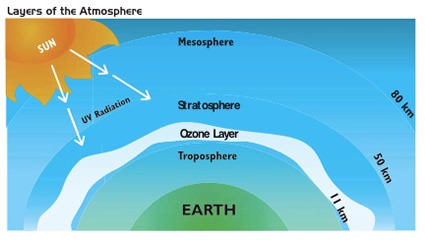
The ozone layer is located in the upper atmosphere, in a region known as the stratosphere. It is comprised of ozone – three oxygen molecules, and is responsible for shielding the earth and its inhabitants against cosmic ultraviolet radiation.strato2

In the early 1980’s a hole in the ozone layer was detected above Antarctica, and increased levels of UV-B light were reported in various other regions. The cause of this was a thinning of ozone layer, and the suspected culprit was a group of chemicals that upon photolysis; released chlorine and bromine atoms in to the stratosphere. Once broken down by sunlight, the atoms interact in a catalytic chain reaction that release oxygen atoms, thereby breaking down the ozone layer.

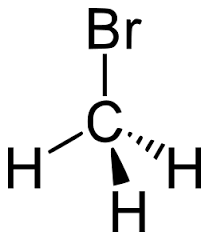
Methyl Bromidemethylbromide

Just a few weeks ago, a family was poisoned in the U.S. Virgin island by what turned out to be a toxic pesticide known as methyl bromide. A toxic broad spectrum fumigant, methyl bromide is primarily used in agriculture to control microorganisms, weeds, and nematodes in soil and on grain stored in silos.  This is done to prevent crops from being destroyed.  Fumigants like methyl bromide are liquids that readily vaporize at ambient temperature. They are so volatize that their gas can escape even when used in enclosed spaces. This is how the Delaware family became poisoned, when the vapors from a room sprayed  with the pesticide below them travelled upwards. Methyl bromide is known to be a potent neurotoxicant, but what is not commonly known is that in 1993, it was classified in the U.S. as a class 1 stratospheric ozone-depleting substance.

Methyl bromide is one of the  chemicals responsible for the hole in the ozone layer. The heavy colorless gas is often odorless, but at very high concentrations it has a sweet chloroform-like smell. It was first introduced in the 1800’s as a fire suppressant, by the 1920’s it was being used in fire extinguishers, but due to toxic poisonings it was withdrawn from this use in the 1960’s. It was also used as a refrigerant, but is use as an insecticide has continued; although restricted.

Methyl bromide reacts in the stratosphere where bromine is liberated. Bromine then reacts with ozone to from oxygen and bromine oxide, thereby depleting the ozone layer. As part of the Montreal Protocol it was scheduled to be phase out of use, but several times amendments have been made allowing for its continued use in certain locations and situations.

Chlorofluorocarbons – CFC’schlorofluorocarbons

CFC’S were developed in the 1930’s and have low toxicity and are non-flammable. They were commonly used as refrigerants(Freon) and propellants in aerosol mixtures such as hairsprays . CFC’s were predicted to be an ozone depleting substance in the 1970’s, and in 1987 as part of the Montreal Protocol over 160 nations  agreed to reduce production and use of CFC’s. They are very stable chemicals that can persist in the atmosphere for years, allowing them to cause damage to the ozone layer for decades. One chlorine atom can destroy several thousand ozone molecules in the stratosphere. For this reason they have been phased out and replaced with less harmful hydrofluorocarbons (HFC’s) and hydrocarbonfluorocarbons (HCFC’s). While the hydrogen in HFC’s and HCFC’s minimize the transport of chlorine-containing compounds from rising into the stratosphere, they can still contribute to ozone destruction.

In short

Ozone layer depletion was the consequence of certain air pollutants. As part of the Montreal Protocol and the Clean Air Act, the United States has ended its production of CFC’s and other ozone-depleting substances such as methyl bromide. Since these pollutants have been minimized and the current content in the stratosphere is degrading overtime, the ozone-layer has begun to replenish itself.

The Silent Killer Strikes again: Carbon Monoxide

I was just talking to my mentor about my blog last Wednesday.  I was telling him that I planned to add an article on Carbon Monoxide poisoning; based on an experience I had renting a basement a few years ago. I was debating in my head if that story would be of any interest to anyone, because no one ever talks about carbon monoxide. You hear a whole lot about carbon dioxide and global warming, but nothing about carbon monoxide, so I wondered about its relevance. Then almost as if I was being divinely inspired, news reports came out a few days later about two separate families who had died as a result of carbon dioxide poisoning. So I’m going to talk a little about those reports, my own experience, and then go into detail about carbon dioxide, because recent events prove, just what I had said to my mentor – people just don’t know…they just don’t understand…carbon monoxide can kill  you. Continue reading