Easy Read: Telling JJ by John Woodrow Cox

Have you ever wondered about the lives of the many infants born with HIV? What becomes of their childhood and what obstacles do they face, socially, emotionally, and medically? This fascinating article: Telling JJ by John Woodrow Cox, takes us into the private life of one such little girl. This story captivated me and broke my heart at the same time. This is a must read, trust me you will have your perspective changed and your understanding of what it means to live with HIV altered, forever.safe_imageJJ has sat at this table many times coloring pictures with crayons at Children’s National Medical Center in Washington. JJ had long known that something else was wrong with her — that no one should touch her blood. A pile of medical records of children who have HIV sit atop a conference-room table at the hospital. – excerpt from Telling JJ

Since the introduction of antiretroviral drugs, mother-to-child transmission of HIV has fallen to below 1-2% in the United States. However, transmission still occurs due to missed opportunities for prevention, such as,  prenatal, intrapartum, and postnatal antiretroviral treatment to both mother and infant. Transmission can occur during pregnancy (particularly in the 3rd trimester), during labor and delivery, or during breastfeeding.

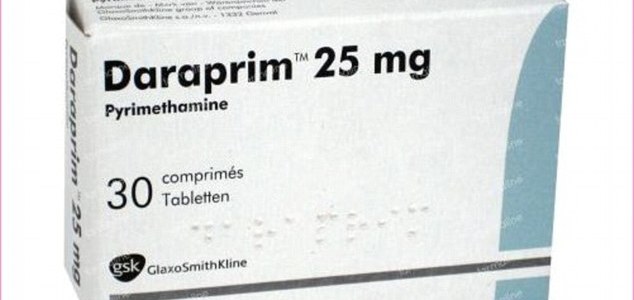
Daraprim

Daraprim (pyrimethamine) is actually an anti-parasitic drug, used to treat Toxoplasmosis and Malaria. People with weakened immune systems – not just those with AIDS – but also,  chemotherapy patients, organ transplant recipients, people taking corticosteroids, and infants in utero cannot effectively fight off the parasite that causes Toxoplasmosis. However, people with AIDS are the most afflicted by this disease; 10 percent of AIDS related deaths are due to Toxoplasmosis. Continue reading

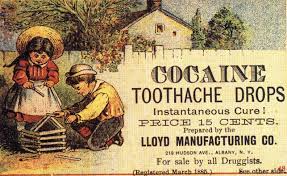
Did You Know: Cocaine Was Used in Dentistry?

“It’s rotten!”, her dad said. I exclaimed, “Really was it?!” My mom was lamenting to me about having her tooth extracted as an adolescent. The tooth wasn’t rotten, but it had a hole, and it was cheaper to pull it than to fill it.”it was $10 dollars to pull it and $100 dollars to fill it…so there went my tooth”, she said. I was already drunk with laughter after she described the dentist placing his foot on her shoulders and pressing her head back with one hand, while he attempted to yank the tooth out with the other. Then, I sobered up when I vaguely heard the mention of the application of cocaine to her gums. I roared with laughter again when she slumped her body down, and waved side-to-side in an attempt to depict the feeling of euphoria it gave her. I yelled out, “cocaine”?! She wasn’t sure if it was cocaine, or if that’s just what they called it. I said, “it had to be…I didn’t know they used cocaine in dentistry?!” So naturally, I had to research the matter and write an article about it.

History of Medicinal Use

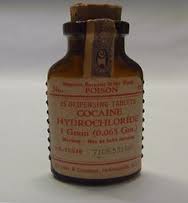
imagesCocaine comes from the leaves of the plant Erythroxylon Coca. The Inca of Peru had long known of the beneficial effects of the dried leaves; which they chewed to decrease fatigue and reduce appetite during long treks. A Spanish Jesuit by the name of Bernabe Cobo, in 1653, wrote that toothaches can be alleviated by chewing the leaves. Then In 1862, German Chemist Albert Niemann isolated the compound responsible for the “numbing sensation” from the leaves, and named it “cocaine”.

Shortly thereafter, Dr. Carl Koller identified cocaine as a topical local anesthetic. Many had been aware that it numbed the tongue (this is why people “taste” illicit looking powders to determine whether they are  cocaine or not), but it wasn’t until Dr. Koller made a solution of cocaine and tested it in a frogs eye, was it elucidated that cocaine can be used to perform previously painful impossible eye surgery. When dropped in the eye of the frog, he was able to touch the cornea with the head of a needle, without the frog so much as blinking or even flinching. He went on to test the cocaine solution in the eye of a rabbit, a dog, and then himself.

Dr. Koller reported his finding at the Congress of Ophthalmology in Heidelberg, on September 15, 1884. Soon thereafter, Dr. William Stewart-Halsted and Dr. Richard John Hall purchased a 4% cocaine solution from Park Davies (the company that  extracted and distributed cocaine in the USA) and subcutaneously injected it as a local anesthetic into the gums and showed that it blocked nerve sensation, without causing the patient to become drowsy or loose consciousness. Thus the use of cocaine in dentistry was born. Tooth extractions could now be performed with ease.

Undesired Effects

Cocaine also causes feelings of euphoria, and many dentists witnessed this affect in their patients. The 4% cocaine hydrochloride solution proved to be too potent, and needed to be diluted. Dr, Halsted and Dr. Hall experimented on themselves with doses and ended up becoming addicted. They started behaving erratically, both socially and professionally. Chronic Cocaine use can cause seizures, panic disorders, and psychosis. Many dentists became addicted and some — like Dr. Halsted,  even died from it. Death is a result of cocaine’s affect on the cardiovascular system, leading ultimately to heart attack or stroke. For this reason, an alternative to the use of cocaine  was sought.
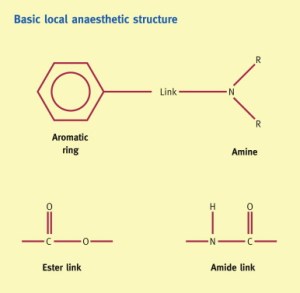
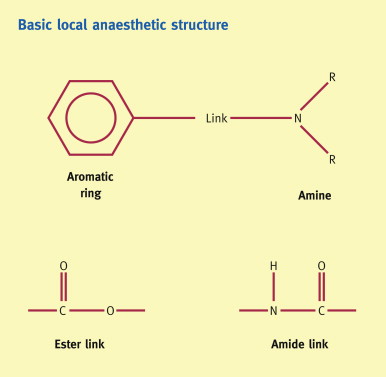
Local anaesthetic agentsIn 1905, Procaine (brand name: Novocain) was introduced. It had the same local anesthetic effect without the addictive property. Later came a new generation of local anesthetic, such as, lidocaine, prilocaine, and articaine; which are still used in dentistry today. 

Pharmacology of Cocaine

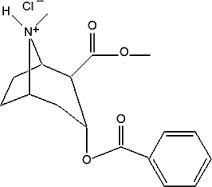
There are three alkaloids extracted from coca leaves: ecgonine, tropine, and hygiene. Ecogonine is the active compound from which we get cocaine. Cocaine is an ester of benzoic acid and methyl-ecognine. It blocks nerve conduction primarily by inhibiting neuronal sodium permeability. It also causes local vasoconstriction due to inhibition of local norepinephrine reuptake at adrenergic neurons. Euphoria is due to inhibition of dopamine re-uptake in the central synapses. Unknown-1

Cocaine is highly toxic due to its inability to be metabolized, inability to develop tolerance, and high ability to become addictive. Even after chronic use, low doses can cause death.  Thus, use has been limited to a topical anesthetic and vasoconstrictor (1-10 %  solution) in surgical procedures involving the nose, throat, larynx, and lower respiratory passages; to control blood loss in these highly vascularized areas.

A Chemical By Any Other Name : How Cinnamon Can Be Toxic (Part 1).

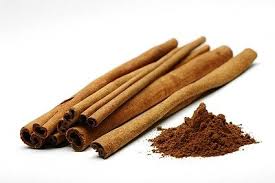
People often think that because something is derived from nature that intrinsically it is safe. However, a chemical is still a chemical regardless of whether it comes from a plant or synthesized in a laboratory. Case in point is Cinnamon and a component of its oil.

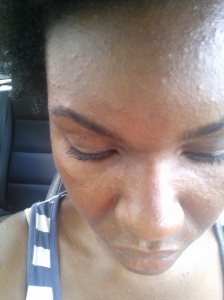
I have been suffering for 2 years from re-occurring, sporadic eruptions of a rash all over my face. The skin on my face would first become very itchy and oily, then it would get hot and red. Lastly, it would break-out into what looked like a heat rash, that would prickle, sting, and sometimes burn. Once the flare-up reached its climax, it would subside anywhere from within an hour to a day. Afterwards, it was such that no one would ever know anything was ever wrong with my face. So, when I would go to the dermatologist, they would look at me as if though I was delusional, and tell me it was nothing— perhaps it was just acne.

Yet still, I was prescribed an array of treatments that didn’t work: oral antibiotics, topical antibiotics, topical anti-fungal, oral anti-fungal, hydrocortisone ointment, a sulfur-containing face-wash. Only one doctor confirmed what I had suspected all along; that it was contact dermatitis! The problem was, I still didn’t know what was causing it. I had previously seen an Allergist, I knew for certain I had a serious allergy to dust-mites, oral allergies to a series of fruit whose proteins cross react with my true allergy to birch trees, but nothing prepared me for this:

It was only after careful consideration of my diet and examination of the ingredient list of all the products I had been apply to my skin and hair, that I came to the realization of the culprit. Turns out there is a chemical that is found in Cinnamon known as Cinnamaldehyde. It is used in cosmetics and foods to impart fragrance or flavor. It is a known skin irritant and a strong sensitizer.

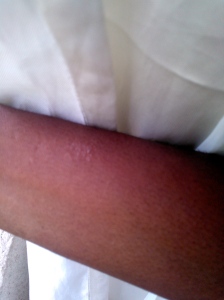
Cinnamon or Cinnamaldehyde was in the cinnamon raisin bread and bagels my sister kept in the house, that I would only eat periodically. It was in the cereal my mom would sometimes bring home. I was putting it in the banana bread I started baking. It was everywhere; I was unwittingly exposing myself randomly and repeatedly to Cinnamaladehyde. Primarily, it was in one of the conditioners I  washed my hair with (I wash my hair everyday with conditioner, and sometimes I would rotate brands). This was why it was primarily affecting my face, but re-occurring sporadically. I wasn’t always using a product that contained the chemical, but when I did the majority of it was coming in contact with the skin on my face. I also had hives and clusters of prickly pimple like bumps appearing on my forearms.

NOKIA Lumia 900_004242NOKIA Lumia 900_004333

Now I take an oral anti-histamine each day, and try to stay away from eating and applying anything that contains cinnamon extracts. Cinnamaldehyde is derived primarily from cinnamon bark and other plants, but is also synthesized in a lab. To know more about how and why it causes dermatitis click here for Part 2.

A Chemical By Any Other Name: How Cinnamon Can Be Toxic (Part 2).

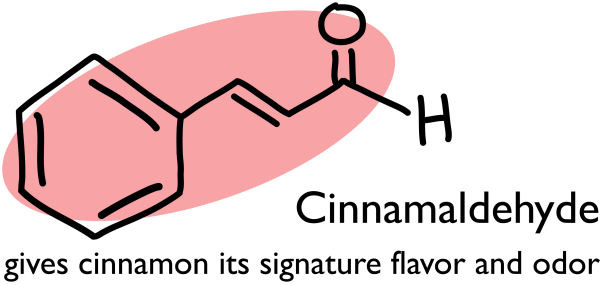
cinnamaldehyde-04

Cinnamaldehyde (cinnamic aldehyde, cinnamal) is a naturally occurring aldehyde in many plants. The clear yellow liquid is extracted mainly from cinnamon bark (cinnamomum cassia, cinnamomum zeylanicum) and has a strong spicy aroma and sweet taste. For this reason it is commonly used as a flavorant and fragrance in foods, cosmetics, and other products. It has also been commonly reported to cause  allergic contact dermatitis, as it is a known skin irritant and strong sensitizer .

Cinnamaldehyde was first isolated from Cinnamon essential oil in 1834. Cinnamon contains approximately 1 to 3.5% essential oil. The oil itself, is approximately 70 – 90% cinnamaldehyde. The oil has been used to impart such fragrances as almond, apricot, butterscotch, hyacinth, and lilac.  It has been recognized in Europe as the most common organic allergen in humans, second  only to Nickel. In fact, do to its potential for allergenicity, the European Union has listed cinnamaldehyde and cinnamic alcohol as fragrance materials that must be labeled on consumer products (essential oils often appear on labels as : “essential oil mix” or ” natural fragrance”). Continue reading

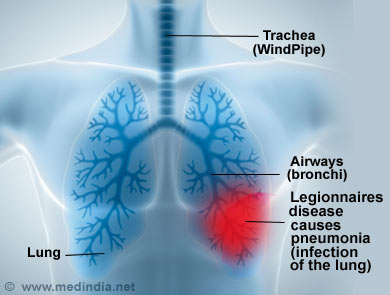
Legionnaires’ Disease : What You Should Know About the New York City Outbreak 2015

Have you ever walked past a large building and felt droplets of water falling on you? This mist is from a cooling tower; or large air-conditioning unit atop the building. What you may not be aware of is that this mist may contain a bacteria known as Legionella; the agent responsible for causing Legionnaires’ Disease.

Recently, there has been an outbreak of Legionnaires’ Disease in New York city and the source of the outbreaks is being linked to 5 cooling towers located in the South Bronx region. Although, cooling towers are one of the main sites where the bacteria can be found; Legionella is ubiquitous in fresh water environments. That is it is found everywhere in the environment — in warm water.

Where Legionella is Commonly Found

Fresh water environments: lakes, ponds, wet soil

Artificial water systems: cooling towers, whirlpool spas, decorative fountains Continue reading

Cell Culture: Preparing mammalian cells for storage

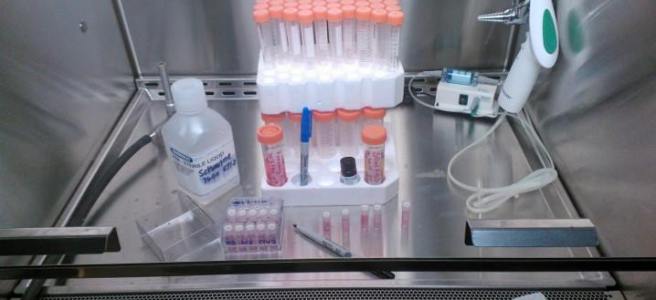
I have been working in vitro with monocyte cells for the past few months. I was fortunate to receive a flask of already cultured cells from a neighboring lab – fortunate because my lab did not have to pay to procure them. However, that meant I did not have a stock supply or a back-up  of the cell-line. Once you start working with cells, they have to be maintained at least every 2 to 3 days. There are only two of us currently working in my lab, so that means if I am away from the lab for an extended period of time I will have to freeze down aliquots of the cells for storage. This should be done with every cell-line you work with for the sake of continuity, amongst other reasons. Cell-lines age as you continue to work with them, and in time may begin to change in characteristics.

The process is slow but simple. Below is a brief description of how it’s done: Continue reading

What’s Eating at the Lake?

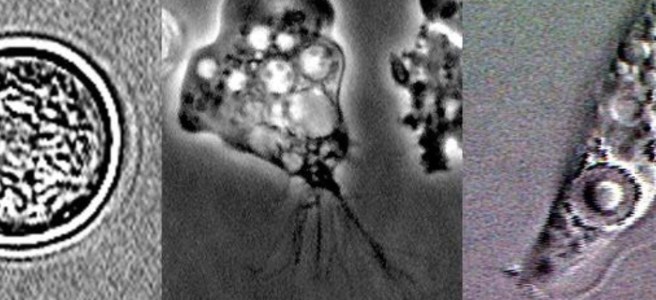
A twenty-one year old woman dies in California from “brain-eating” amoeba. A Minnesota teen boy is reported to have died also. Now the same “bugs” have been found in St. Bernard Parish water system in Louisiana. Is this an epidemic? They say it’s rare; if so then why is it so concerning, that its being screened for in some city water systems?

Should I be afraid?

It’s not an epidemic and it is rare, but the problem is it is deadly! The “bug” is small and can’t be seen by the naked eye and most don’t even know of its existence or danger. Also, it is not readily diagnosed because, the symptoms take a long time to show, and they mimic those of bacterial meningitis. By the time doctors even realize what they are dealing with, in most cases, it’s already too late.

life-cycle_web Continue reading

The first Genetically Modified Food in the United States was the Tomato

macgregorsDid you know the first FDA approved Genetically Modified Food, commonly known by the acronym GMO (genetically modified organism), was the tomato? It was introduced in the United states back in 1994 and was developed by the company Calgene Inc.

Below I have posted citations from two newspapers:

Pratt, S. (1994, May 19). CHICAGO AREA GETS TO SAMPLE NEW BREED OF TOMATO. Chicago Tribune (Pre-1997 Fulltext) Retrieved from http://search.proquest.com/docview/283811180?accountid=14068
Can biotechnology provide flavorful, garden-fresh tomatoes to supermarkets across America year round? Shoppers in the Chicago area and parts of California should find out by the end of the month now that the U.S. Food and Drug Administration has approved the Flavr Savrtomato, the country’s first genetically engineered foodstuff. Developed by Calgene Inc. of Davis, Calif., over 10 years, Flavr Savr tomatoes are genetically modified to resist rot so they can ripen fully on the vine but still hold up during shipping and storage. “The Flavr Savr process will be able to provide Chicago with a flavorful backyard tomato, but one that is grown in Mexico,” said Roger Salquist, chief executive officer of Calgene. They could begin showing up in the next 10 days.

Dailey, P. (1994, May 26). HOT TOMATO HOW DOES THE NEW FLAVR SAVR TASTE? Chicago Tribune (Pre-1997 Fulltext) Retrieved from http://search.proquest.com/docview/283785985?accountid=14068
The first genetically-altered tomatoes appeared at a Chicago-area market Saturday after being heralded by the producer as the first year-round tomato with a vine-ripe taste of summer. But a Food Guide blind tasting this week found the tomato did not deliver on that promise. Flavr Savr tomatoes, approved last week by the Food and Drug Administration, are marketed commercially under the name MacGregor by Calgene Inc., a California-based biotechnology firm. They have been genetically engineered so their aging process slows to a crawl. This allows them to spend more time ripening on the vine, ostensibly so the flavor can develop naturally with the full benefit of sun and soil. Earlier this week the Food Guide gathered from various markets six varieties of tomatoes including the Flavr Savr and staged a blind tasting. Put to the test were cherry and regular tomatoes from Holland, purchased at Whole Foods and Treasure Island supermarkets respectively; regular tomatoes from Omni Foods; plum tomatoes from Whole Foods; regular tomatoes from Market Place, and the MacGregor tomato.

The Calgene modified tomato was dubbed the MacGregor tomato. It is genetically modified to express an extra copy of a gene that codes for an enzyme known as polygalacturonate (PG). Polygalacturonate is responsible for the softening of fruit as they ripen, but the modification actually decreases the amount of PG in fruit. This results in tougher skin, and a reduction in the age associated softening of the fruit; which is the reason why these tomatoes are said to last longer and be more flavorful. There is also another gene added to the tomato: ” In approving the Calgene tomato as safe, the FDA also allowed the use of the kanamycin-resistant gene as a safe food additive…It is used as a “marker gene” to determine which plants have been successfully modified and is harmless..”.

You can read more about GMO’s here

“On the Spot”: Interview with Veterinarian Nastassia Germain

 I have the pleasure of introducing you all to a friend of mine. She has graciously agreed to do an interview for us, in order to help give a better understanding to the public of the real lives of persons in the science and medical field.  Also to give clarity to what these careers actually entail, and most importantly to give a face to the profession.

What is your name, title/current position and where do you work?

My name is Dr. Nastassia Germain, DVM. I currently work at a small animal general practice in Brooklyn and I also do per diem Emergency shifts at a 24 hour emergency hospital. I am actually currently looking to transition from general practice to ER full time. Continue reading