Danger Behind Edible Wild Mushroom Foraging

Edible mushrooms have become a popular protein source in today’s cuisines, and as soon as things go mainstream, we want to up the status quo. As such, foraging for edible wild mushrooms is now trending. The problem is, how does the novice tell the difference between what’s edible and what’s poisonous? Even experts can mistake one mushroom for another, as the morphologies can overlap in similarity. Just recently in California, Death Cap mushroom intoxication has made the news, and in this case it didn’t lead to death, but ingesting this fungus can be very lethal. Continue reading

Wood and Cheese

woodedcheese

Recently there has been a frenzy of articles about cheese manufacturers producing “fake” cheese. It has been said that grated or shredded cheese, particularly parmesan cheese are being adulterated with wood. This is a gross misrepresentation of the actual facts. What is true is that the cheeses contain a food additive known as cellulose, which is commonly derived from wood.

Cellulose is not wood !

Cellulose is a natural polysaccharide found in the stems and branches of many plants. It is the major component responsible for the structural rigidity of plant cell walls (mammalian cells do not have cell walls). There are many valid and valuable uses for cellulose in food. Continue reading

Rabies and the Little Boy Who Didn’t Cry Raccoon

littlboyraccoonRecently there was a cute, little, 6-year-old boy bitten by a rabid raccoon. Soon after attack he was taken to the hospital where according to news reports, he was sutured and treated with antibiotics before being released. Later reports, confirmed that the raccoon was indeed rabid, however no additional reports addressed whether the little boy was vaccinated against rabies. Hopefully, he was treated after confirmation of the raccoons rabidity, but this type of reporting leads to confusion amongst the populace regarding what to do in case of a rabid animal bite. Continue reading

Corrosive Water and the Flint Michigan Crisis

By now we have all know about the water crisis in Flint Michigan. Tons of articles have been written discussing the politics surrounding the Lead contaminated water.  As a result many misconceptions have arisen, for example; many people assume that when it is said that the water was “corrosive” that, that meant the Flint River water was contaminated with lead already. This however is not the case. What if I told you that water sources such as rivers and lakes  can be naturally corrosive? What if I told you that lead is not the only  substance in the Flint water that residents should be concerned about? Continue reading

Difficulty with C.Diff: A Personal Account

As we transition into the colder weather, many people will get sick. Seasonally, the most likely cause of illness will be from the common cold or influenza (flu). Many will seek treatment, and request antibiotics. However, the cold and flu are caused by viruses, and antibiotics can do little to nothing in their treatment. Many people are not aware, that over-use of antibiotics can be harmful. Even when antibiotics are correctly taken to treat bacterial infections such as pneumonia or strep throat, there can be a down side to treatment. Such is the case with “Tiffany Lotus”(name has been changed due to sensitive nature of this condition), who after treatment with antibiotics for reoccurring Urinary Tract Infections developed C. Difficile Colitis.

Stacia (aliquot the science spot interviewer):  Infection with C.diff is opportunistic, meaning it occurs after there has been a disruption of the normal flora or microbiota of your gut. This could be a result of antibiotic use. Was your colonization subsequent to antibiotic treatment?

Tiffany L.: Yes Continue reading

Natalie Cole & the Big Bad Wolves: Hepatitis C, Pulmonary Hypertension, & Renal Failure

When I hear a Nat King Cole song or a duet by Natalie Cole with her late great father, I think of summer afternoons driving down Ocean Parkway, heading to Coney Island with my Dad and sisters.

Unknown.jpeg

Natalie Cole was a great singer in her own right, and recently passed away from Idiopathic Pulmonary Arterial Hypertension, which was undoubtedly a complication of kidney disease, subsequent to treatment for Hepatitis C – which she suffered from for over 2 decades of her life.

According to this article Natalie Cole  had undergone chemotherapeutic treatment for Hepatitis C that lead to her development of Kidney Failure in just a matter of months. Subsequently she was on hemodialysis until she received a kidney transplant in 2009. She contracted Hepatitis C from intravenous drug use, to which she has admitted to.

Pulmonary hypertension is associated with receiving hemodialysis and kidney transplantation. There is a 5 – 14% prevalence of Pulmonary Hypertension associated with renal transplant, and the prevalence with hemodialysis is as high as approximately 50%. Signs and symptoms of Pulmonary hypertension are often masked, and diagnosis may only be confirmed after right ventricular  heart failure develops. The condition is a progressive disorder, that increases both morbidity (sickness) and mortality (death). Irreversible heart failure ensues followed by death.

Hepatitis C

Hepatitis is the term for liver Inflammation. Hepatitis can be caused by many pathogens, but the main cause is viral hepatitis. There are 5 types of viral hepatitis of which Hepatitis C is one.

Hepatitis C was first characterized as non-A-non-B-hepatatis. Discovered in 1989, after an outbreak of chronic hepatitis in transfusion recipients in the 1970’s, the RNA virus causes an infectious disease that affects only humans and chimpanzees.

Hepatitis C is spread  directly from person-to person, primarily through intravenous drug use or unprotected sex (usually anal sex). It is spread through the blood and through circulation infects the Liver; where it enters the hepatocyte (liver cells) and replicates more of the virus. Therefore, It can also be contracted during blood transfusion, organ transplantation, and dialysis (if contamination is present). Tattooing and piercing are also a risk.

Once contracted the virus causes acute hepatitis which might spontaneously resolve on its own. In those whom fail to clear the virus on their own, chronic hepatitis ensues. The disease is often asymptomatic, and therefore many who are infected are unaware. Clinical manifestations present as jaundice, enlarged liver, and anorexia. The disease eventually may progress to Liver Cirrhosis and/or Liver Cancer, this often occurs within 10 to 20 years of having the disease.  Unlike Hepatitis B, there is no inoculation vaccine available against Hepatitis C.

images.jpegDespite of all this, Natalie Cole continued to sing, tour, and lead a productive life. She never gave in, and or that she will always be “Unforgettable…that’s what you are…and forevermore that’s how you’ll stay”. RIP Natalie Cole.


Cyanide and the Vanishing Capsules.

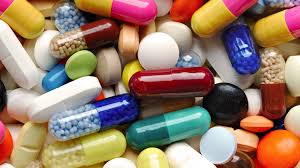
Back when I was in the Third grade, I got a really bad burn on my shoulder…long story for another day. I remember though, that my mom popped open a Tylenol capsule and poured the white powder over the raw pink skin that was exposed, before bandaging me up and sending me off to school. Yes, this was in the early 1990’s when people were more resilient and didn’t run to the emergency room, seemingly as often, but I digress. Has anyone else ever wondered why two piece hard capsules have virtually disappeared ? Now we have pills that look like capsules but, can no-longer be pulled apart and easily emptied of their content. What ever happened to those hard capsule pills that dominated the over-the-counter pain-killer market. Continue reading

Missing in Action: laboratory chronicles

I know I have been M.I.A. guys, sorry! I have been busy in the laboratory; cleaning it out and conducting an elaborate experiment. Both have been time-consuming and laborious, and I’d rather not post an article at all, than to post one that is insufficient and lack-luster.

The thing about it is, research in academia is far different that in industry(university vs. company); budgets can be much smaller, labs more congested, and resources and supplies far fewer. In the case of the lab I am in, my mentor inherited it from the department after another professor left. With that, he inherited lots of old supplies and equipment, which created a lot of clutter. For safety reasons, and flow of work, that clutter had to be cleared. Unfortunately, a lot of that work falls down to the graduate students.

It can be very overwhelming, when you don’t have all the supplies and equipment you need to do the work you want to do. I had been hunting an inverted microscope with a camera for some time, and begging for the purchase of other needed equipment. At one point, I had a moment of weakness, and broke-down crying. Thankfully my lab-partner was there to console me and counsel me back to sanity (the walk to get pizza also helped).  Eventually, I was able to use a microscope in another lab. It is so important to build amicable and good working relationships with your fellow researcher. If it were not for these kind-hearted people, I would be lost.

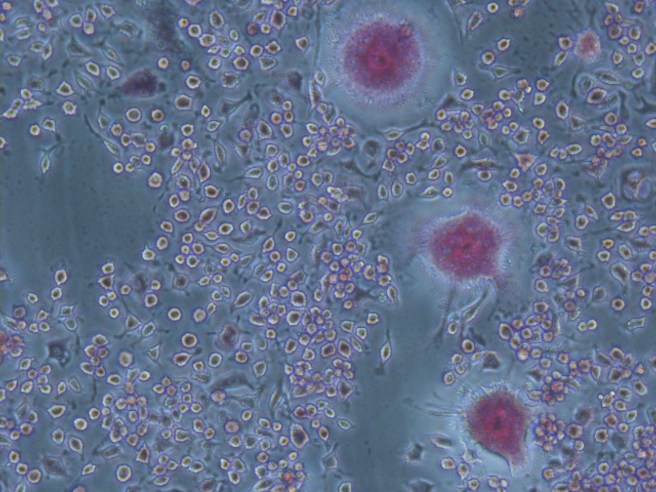
In better news, weeks spent ordering supplies, reading a multitude of scientific journal articles, setting up experiments, and recording data have paid off. My work has thus far been successful, and I am very happy because it is very possible to do all that work, and have your experiment fail! Below is an image of the cells I’ve been working on and was able to capture on camera:
0.01uM+R+-Pb_TrapStn_SN (2)


Genetically Modified Fish for Human Consumption: the FACTS!

Atlantic Salmon

Genetically modified crops have been on the market for decades in the United States, and other parts of the world. However, this fall the FDA (U.S. Food and Drug Administration) has approved the first-ever genetically modified animal for human consumption, and there is much public push-back and concern. AquAdvantage fish are Atlantic Salmon produced by the AquaBounty Technologies Corporation (formerly AquaBounty Farms). So, what’s all the concern really about? Read on to find out what you need to know Continue reading

Sugar Substitute Toxic to Dogs

SUGAR-~1

In toxicology we say that the dose makes the poison. It should also be emphasized that species makes the toxin as well. People think that because something is safe for humans that it is also safe for their pet.

Though considered safe in humans, Xylitol is very toxic in canines. When ingested by dogs, it can cause hypoglycemia (low blood sugar)  and hepatic necrosis (liver failure). .Xylitol is rapidly absorbed and causes an increase in insulin secretion, which  results in a rapid decline of blood sugar in dogs. Metabolism of Xylitol occurs in the liver, and this may play a role in its toxicity towards this organ.

xylitolXylitol is a sugar substitute that is commonly used as a sweetener in gum, candies, and baked goods. Discovered in the late 19th century, it was used during  World War II, when there was a sucrose (sugar) shortage. Its use gained popularity with the rise of Atkins-like “low-carb” diets. The 5 -carbon sugar alcohol is reported to have less than two-thirds of the calories of most sugars, yet is has a similar sweetness to sugar.

A dog that has consumed Xylitol or products containing this sweetener, might exhibit the signs and symptoms of lethargy, weakness, ataxia, and vomiting. Seizures, coma, and death are also possible. If consumption of Xylitol is known or suspected, immediate hospitalization and treatment with dextrose(type of sugar) intravenously is needed. This is done to establish normal blood-glucose levels. To protect against hepatic injury, treatment with antioxidants are administered along with the dextrose. Liver damage may not always occur.

PV-Xylitol-toxicity

Xylitol has a wide margin of safety in most mammals. It is not toxic to cats, and is actually recommended to be added to cat drinking water to prevent cavities. In fact, Xylitol  is commonly used in human oral care products, such as, toothpaste and mouth-wash. It prevents certain bacterial growth. In doing so , it prevents oral bacteria from producing acids that damage the surfaces of teeth. Although considered safe in humans and particularly beneficial to diabetics, Xylitol is severely toxic, and life-threatening to dogs. Be sure to read labels when giving food stuff to dogs, and even when using household products around them. Some non-edible products used around the home contain Xylitol. Even worse, Xylitol may not be listed as an active ingredient in some products, and it may even be a component of some medications and vitamins.